Works
Spiegelbilder
Statement
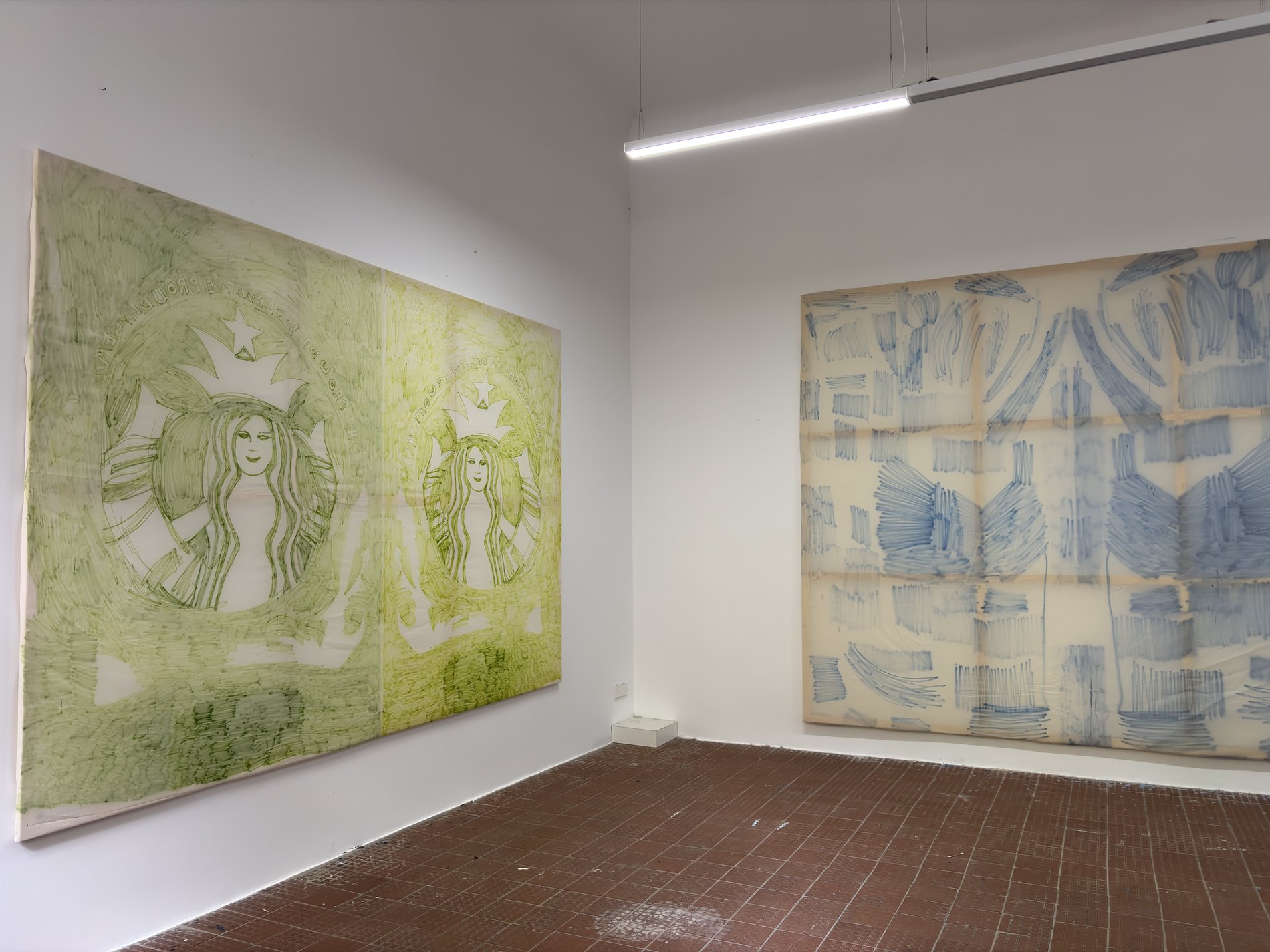
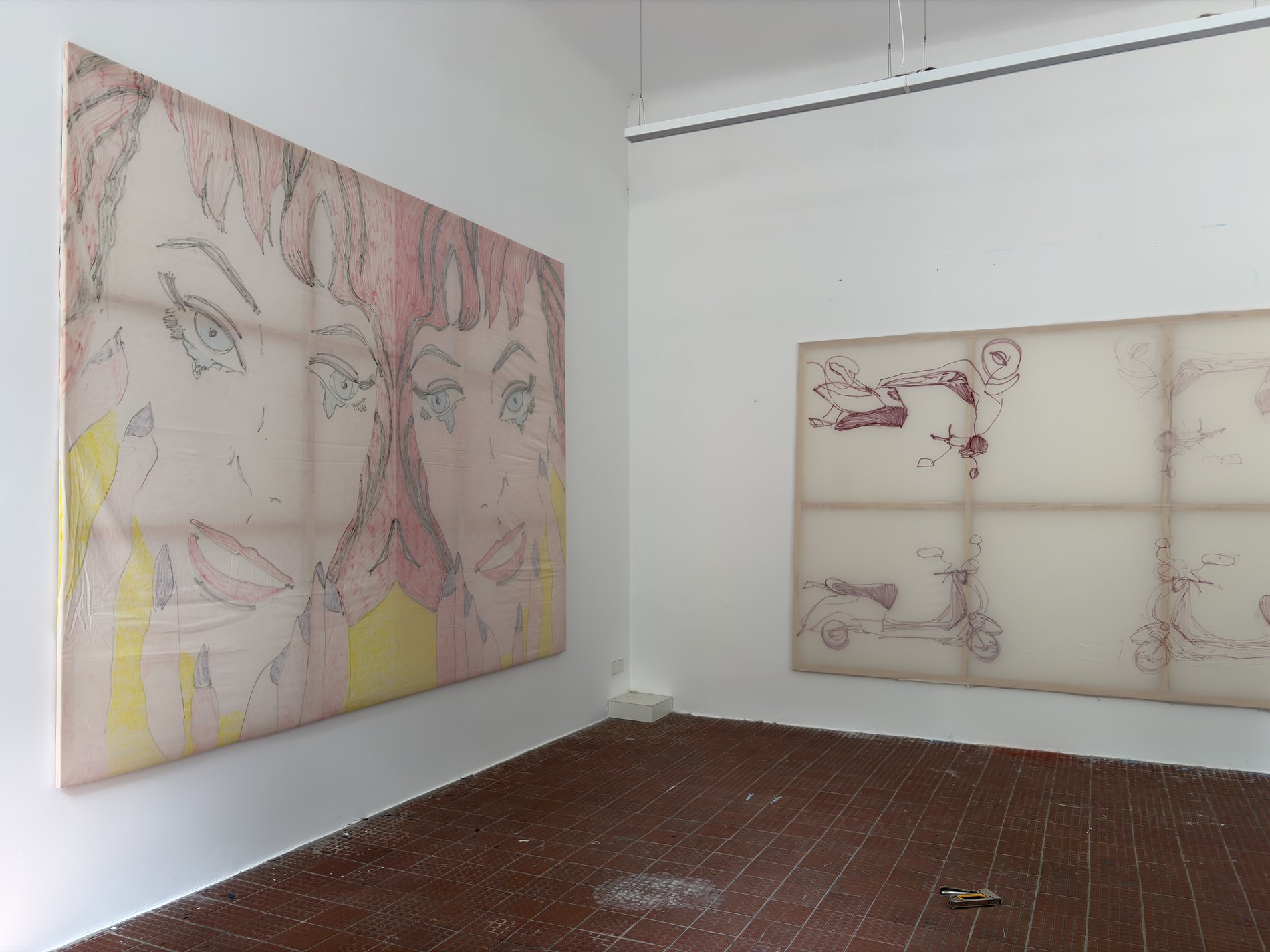
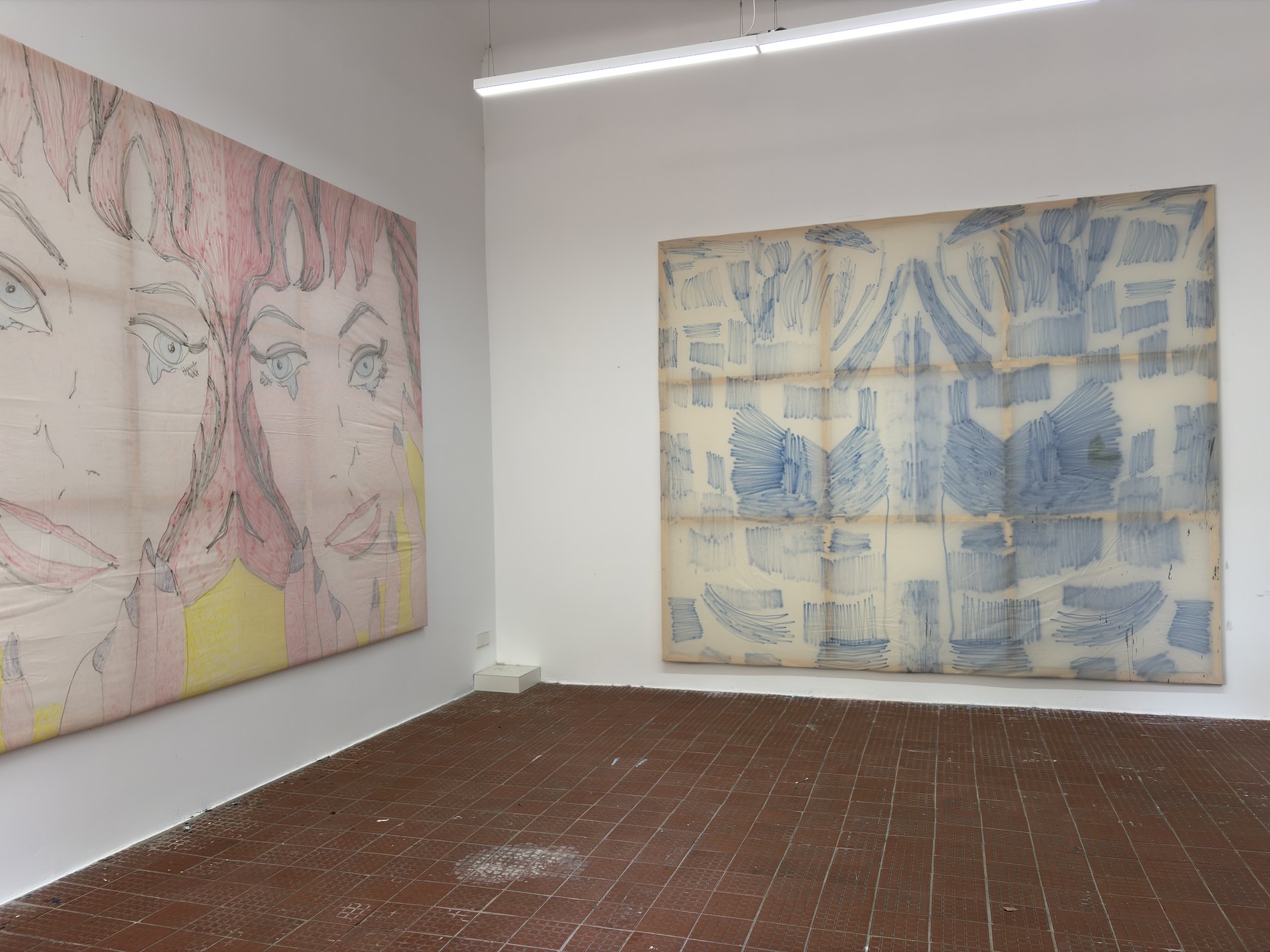
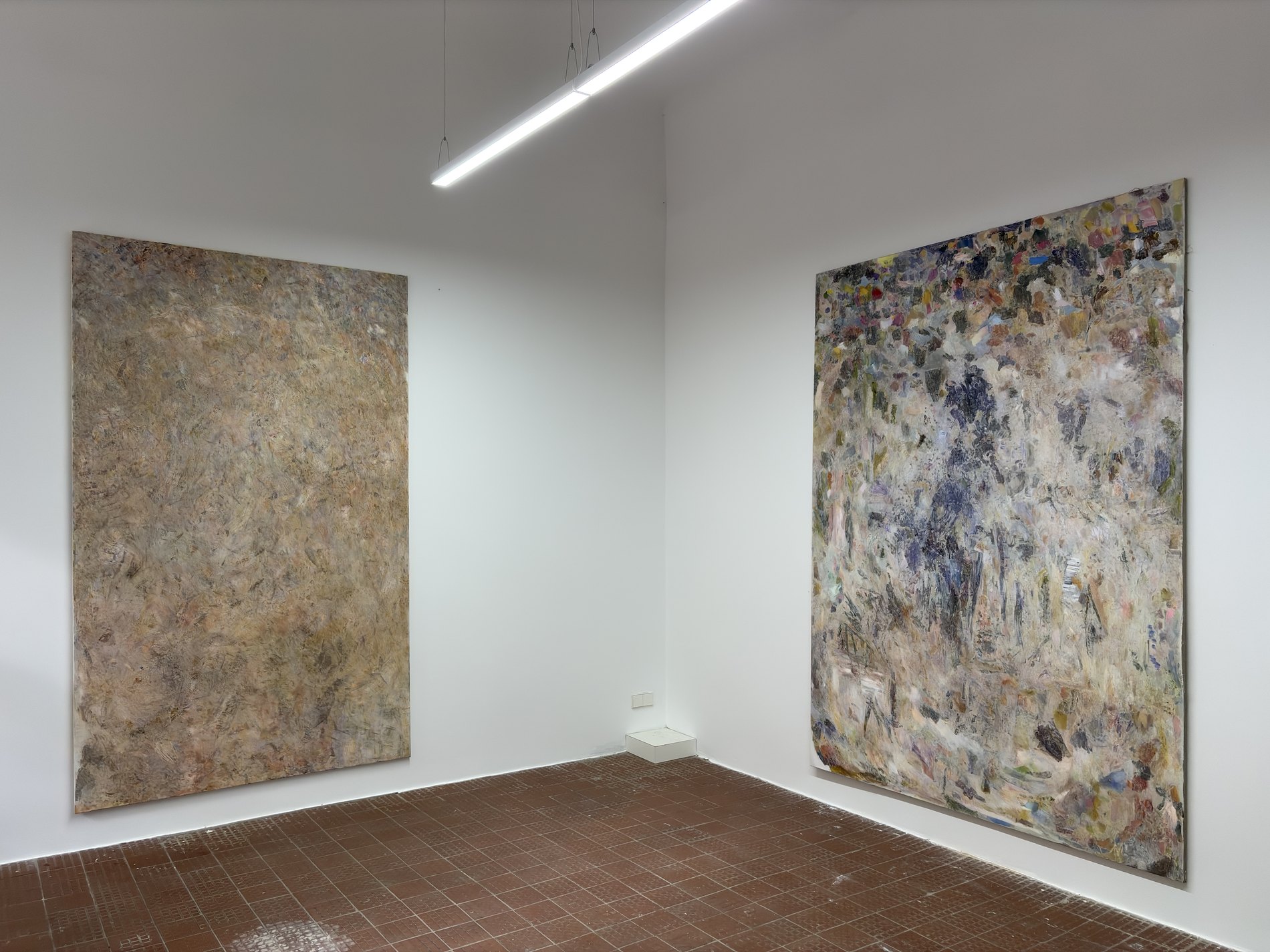
The series “Spiegelbilder” is concerned with renegotiating the perspectival center.
By juxtaposing iconic images from art history with themselves, the original center becomes the background, and what was previously at the edge becomes the new focal point. A space in-between emerges — both in the relation of the motifs to one another, and in the relationship between frame, space, and painting.
The gaze moves between two halves of the image, which together form a whole, interwoven in their contradiction.
This moment of unreality is intensified by the contactless application of paint. During the painting process, the color pushes from the painted surface into the layers behind it, which become the front once the canvas is stretched.
In the ambivalent simultaneity of large-format drawing on a fragile support, abstract and figurative painting, naivety and psychology, spontaneous brushwork and precisely constructed motifs, the act of seeing itself is reflected — both toward the image and toward one's own seeing — raising the question: how do we relate to these formative images?
Jahresbilder
Statement
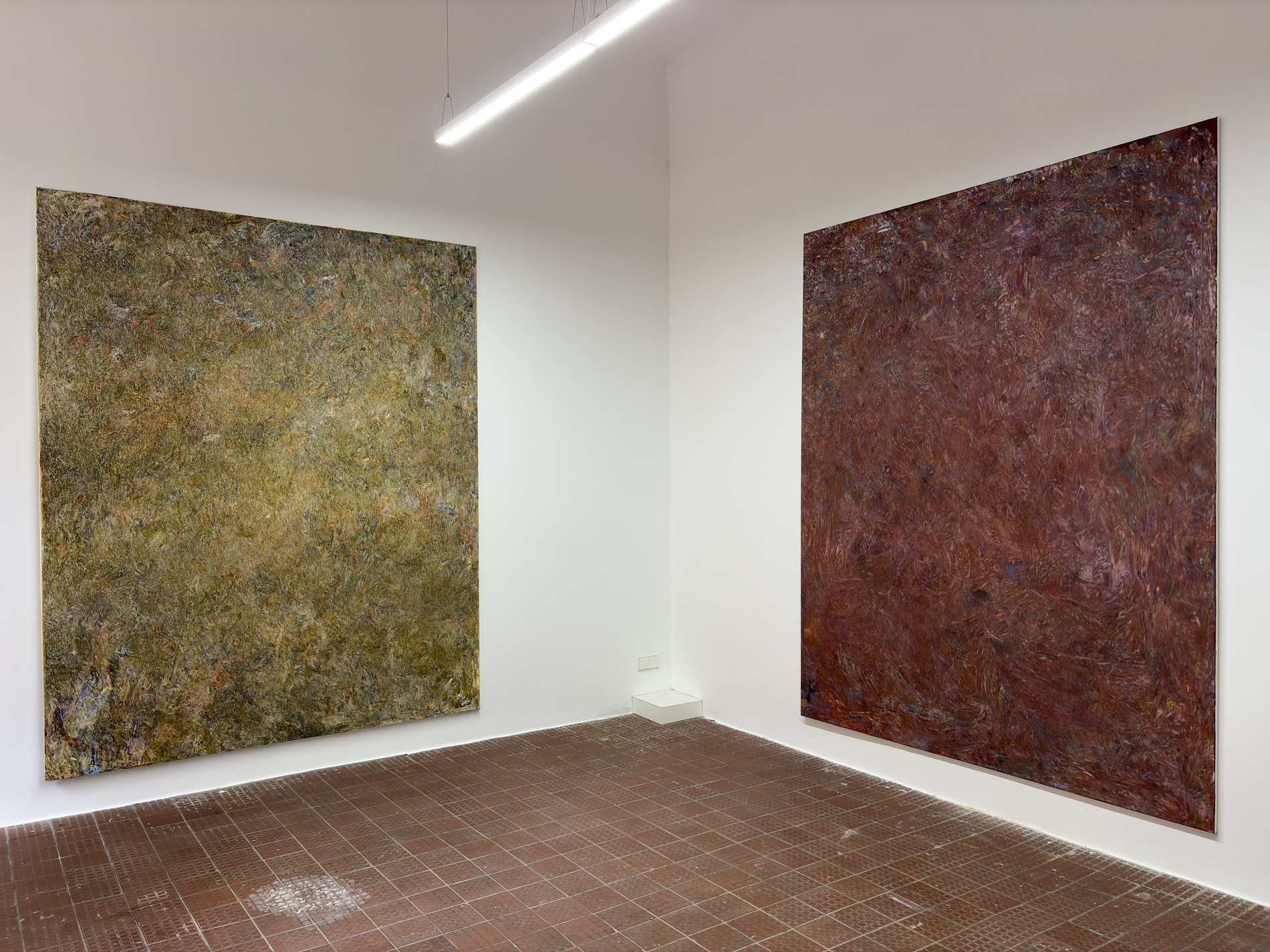
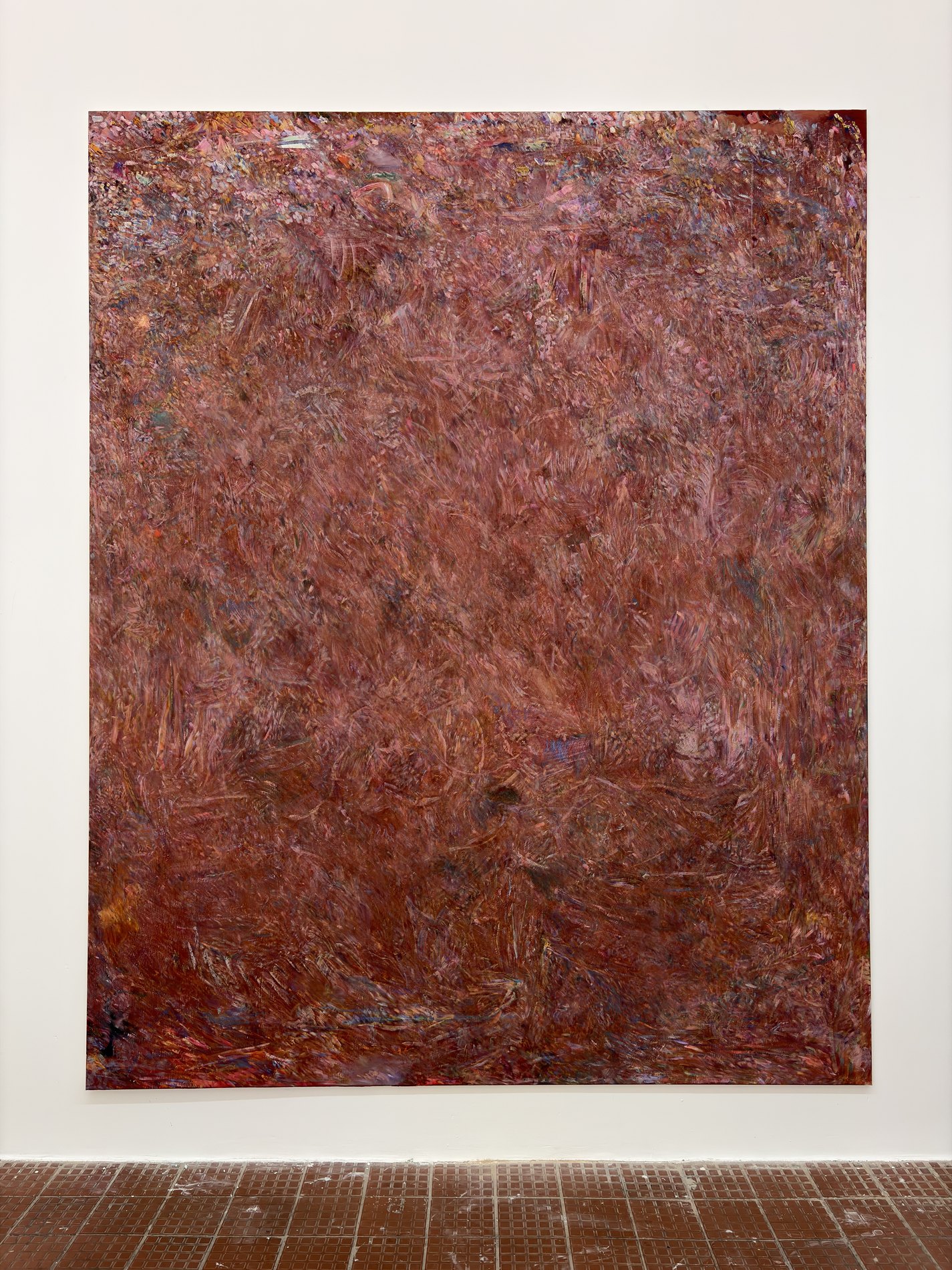
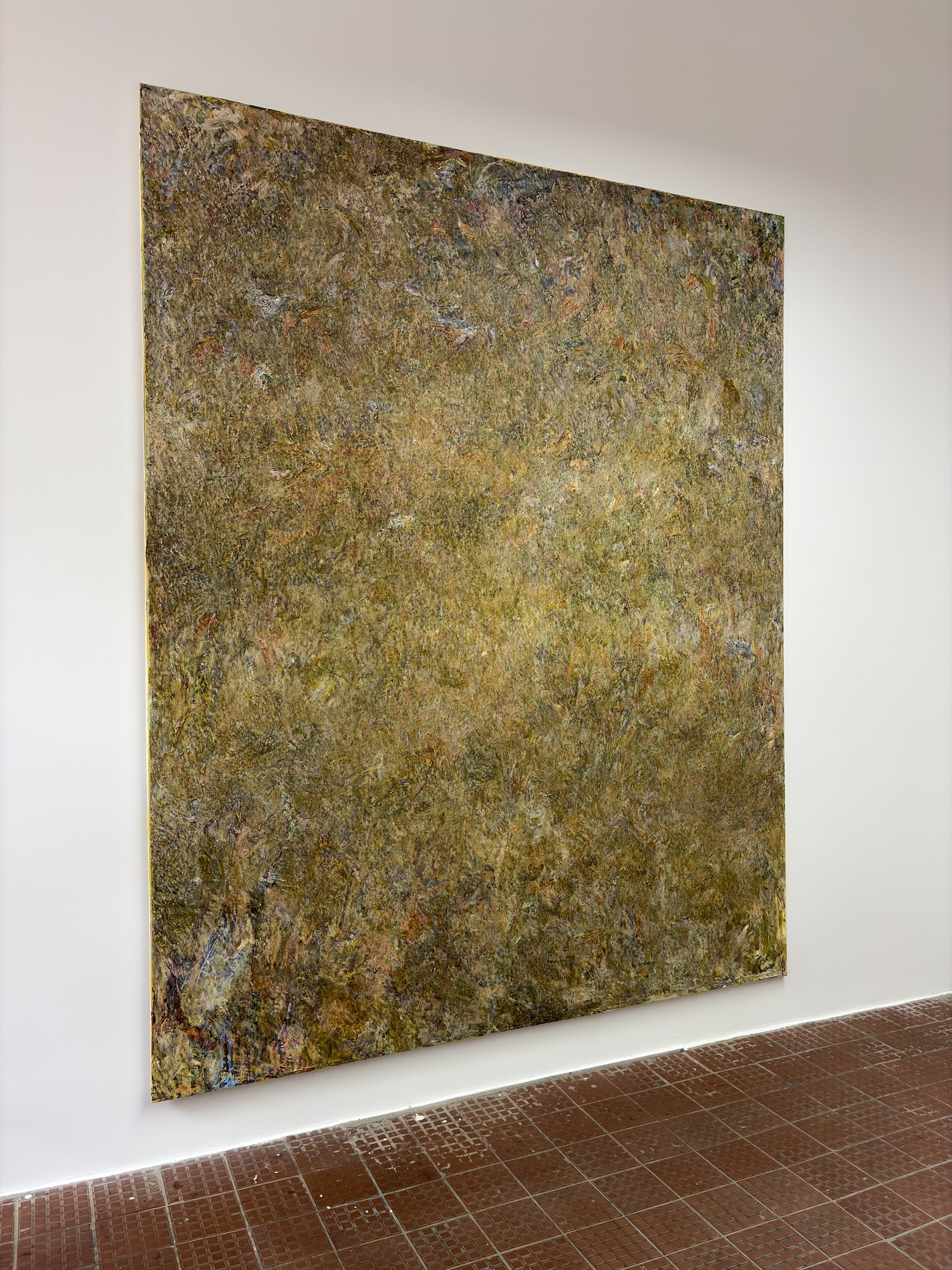
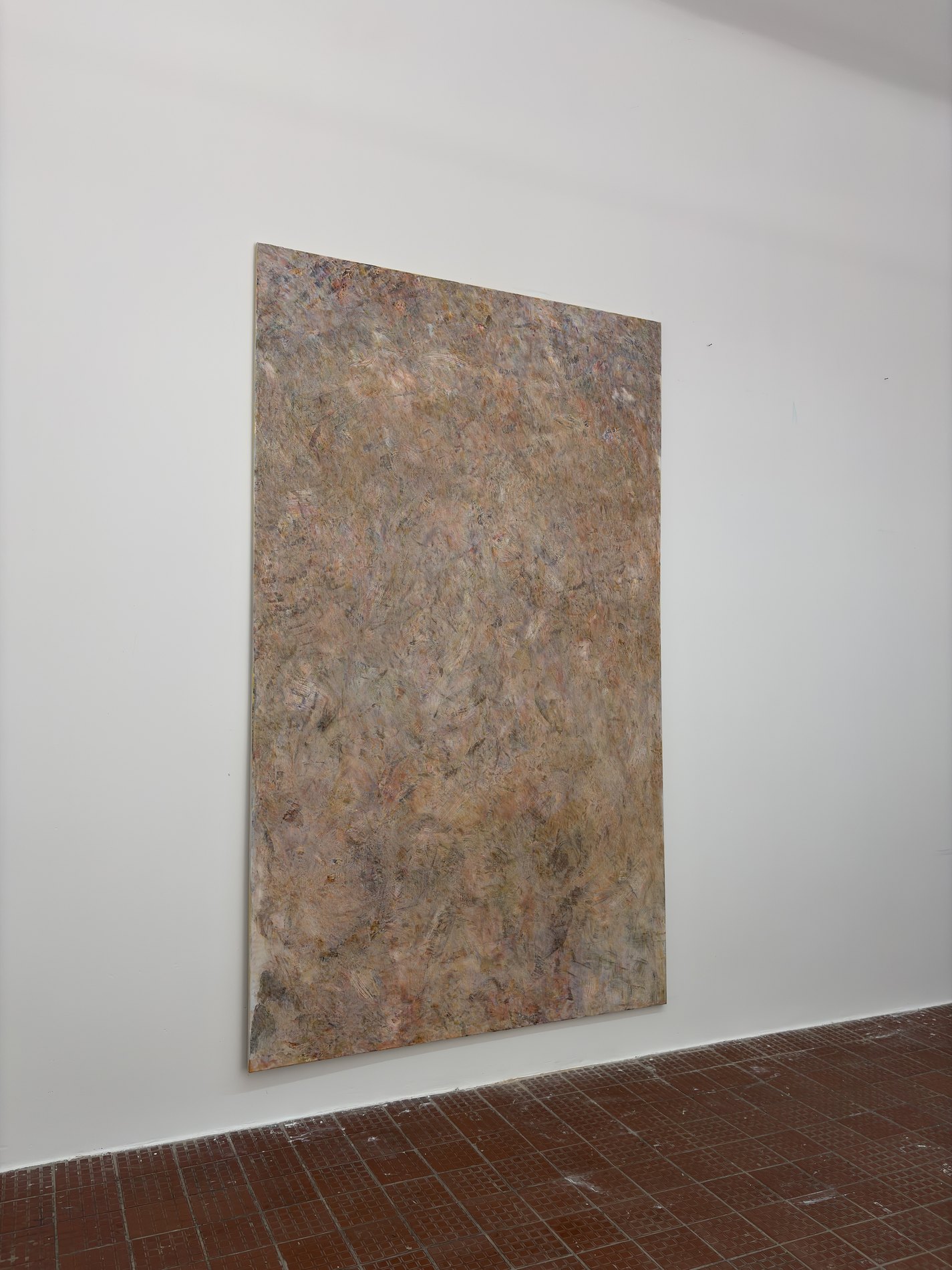
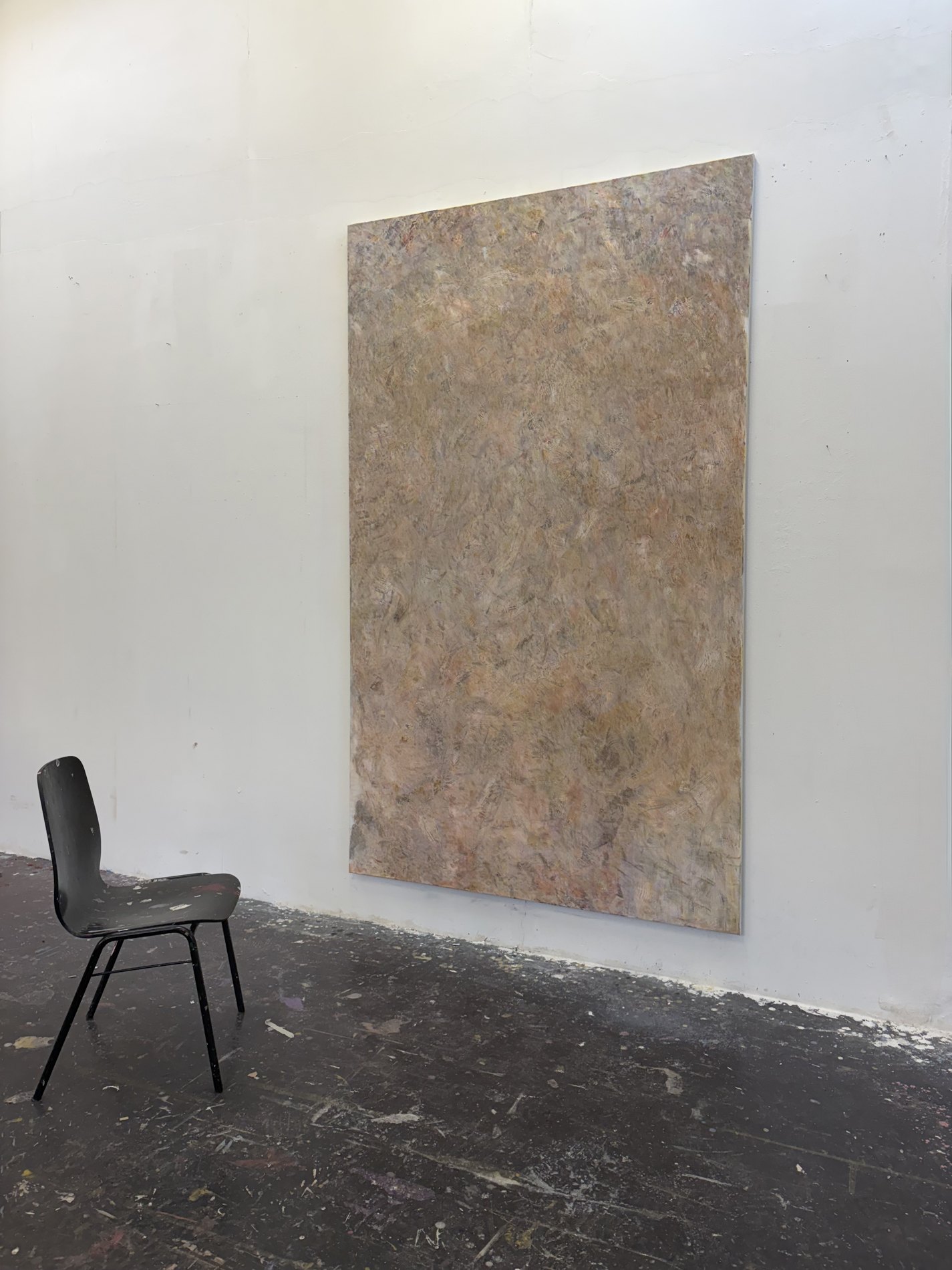
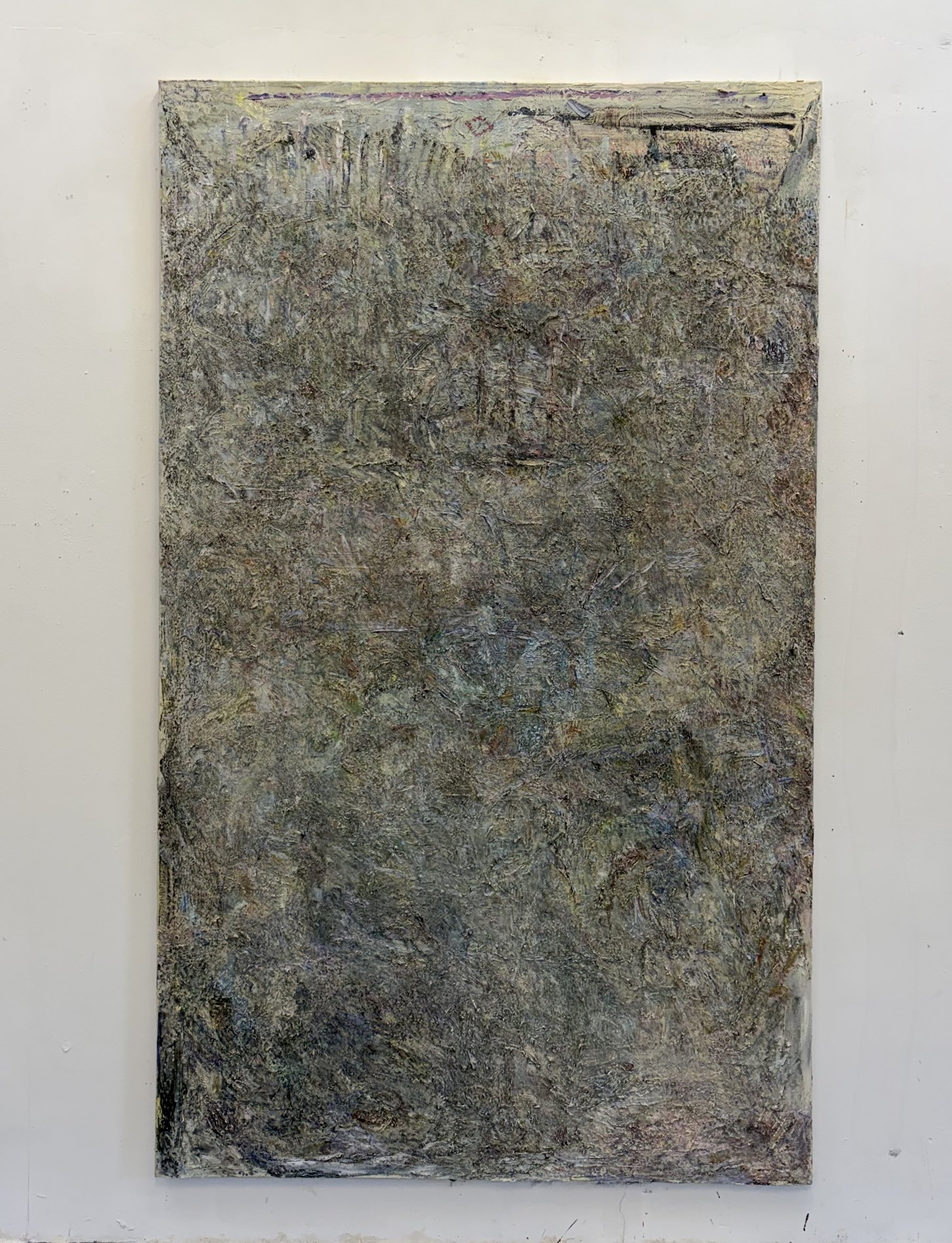
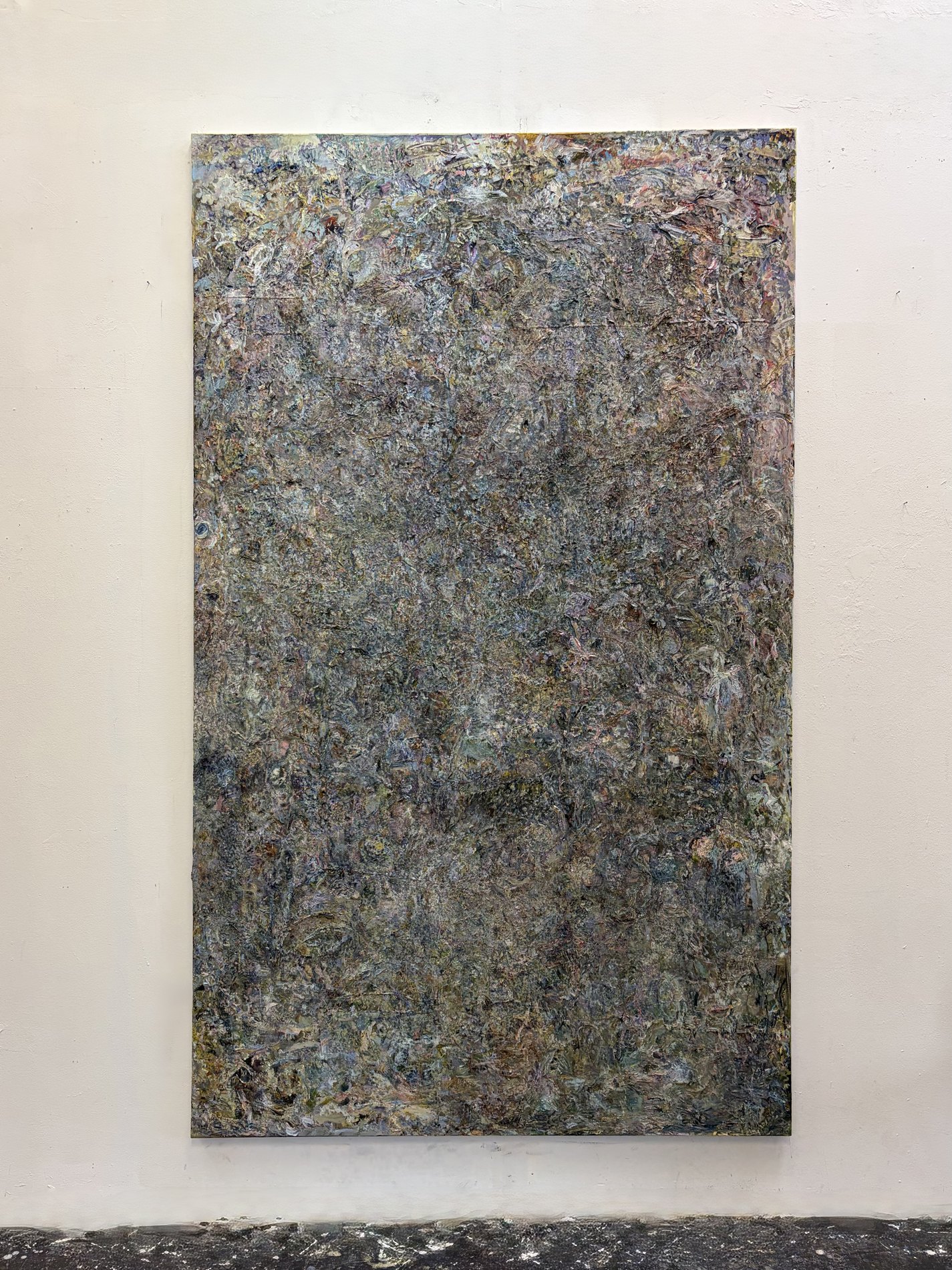
The Jahresbilder proceed from the question of how the memory of time can become visible. What interests me is not the painting as the depiction of a single moment, but as a condensation of many perceptions, memories and painterly decisions. This is why these works come into being over the course of a year or longer.
Where the Spiegelbilder are concerned with the collective perception of time, the Jahresbilder deal with the subjective perception of change. Through the long process of painting, an indentation of presence emerges — like a thermal camera made of paint, recalling a past mood as though through fog — and with it the question of how our experience of the world is bound to our own perspective.
Lichter
Statement
Time and perception are the driving motivation here as well. In a sense these “light” paintings are mayflies. Each one comes into being in a single day, in one session. At the time they were made they emerged almost like a calendar, day by day. On the one hand I was interested in the simple counting of time, of days. This simplicity corresponds to the way they are painted, which never tries to reach beyond itself but stays within an inwardly directed rhythm.
Questions occupied me such as: where is the centre of a painting? Do we have a tendency to want to read images, and where do we begin, when do we stop?
The “light” paintings largely resist interpretation and rest in a meditative state of inconsequence. All the more, the viewer's own perspective is reflected in them. Through the steady looking at the differently coloured lines, colour takes on a peculiar significance.
— Enric Freund
Martin Schulz on the “Lichter” paintings
For the longest time, the genres of still life and landscape were considered subordinate to history painting and portraiture in the theory of European painting. They counted as beautiful accessories that lacked depth of meaning. This is largely where the revolution of modern art began, overturning the classical hierarchy. Instead of serving a symbolism beyond the surface, modern painting concentrated above all on the splendour of its colours at the surface; on their full splendour, which is nowhere found more richly nuanced than in nature: in flowering plants as in the impressions of light reflected from the radiant sun. At the same time, no other artistic medium can translate and autonomously render this phenomenal variety better than painting. Seeing always comes before thinking.
Compared with his earlier pictures, Enric Freund's new paintings are more reduced and therefore focused on what is essential to the effect of painting. The construction of their basic structure repeats itself more or less and is varied above all in colour: a circle, never quite centred, as an epicentre, surrounded by a wreath of straight rays that appear either multicoloured or in an alternating chromatic rhythm. Sun pictures in their simplest form? Pictures of the sun at all?
For all the objectivity of these clearly identifiable and perhaps representational forms, they are nonetheless always experienced subjectively in each individual perception. It is not going too far to say that the more reduced the colour forms are, the harder it ultimately becomes to describe them. To arrive at the primordial appearance itself is accordingly the fundamental concern of philosophical phenomenology: to proceed from experience that is at first purely sensory, entirely bound to the organs of the body, whose subsequent linguistic and conceptual appropriation can only ever be secondary, belated and therefore falsifying. So: to painting itself!
— Martin Schulz (translated from the German)
Figurative Paintings
Works on Paper
Installation Views